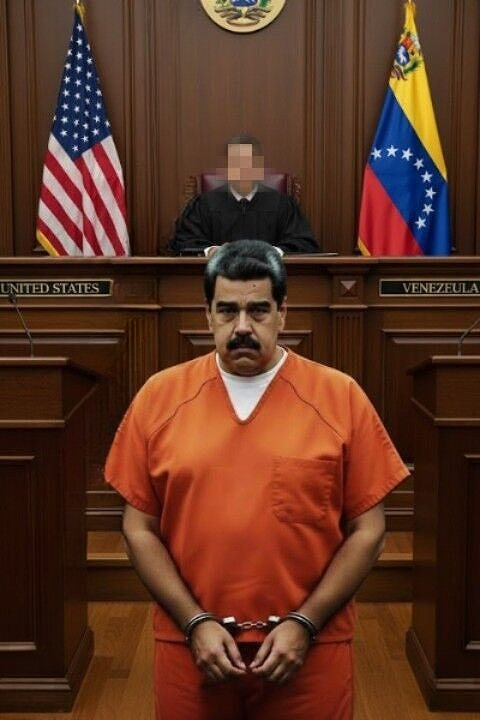
The chamber of the United States Senate has recently become the focal point of an intense constitutional debate, ignited by a dramatic and controversial U.S. military operation in Venezuela. The mission, which resulted in the capture of Venezuelan leader Nicolás Maduro, has stirred complex questions about presidential authority, congressional oversight, and the meaning of armed conflict in an age of rapid, targeted interventions. What began as a bold overseas action has evolved into a far-reaching examination of executive power and the structure of American governance.
The operation unfolded in the early hours of January, when highly trained U.S. personnel carried out a coordinated strike in Caracas. Maduro and his wife were detained and swiftly transported to New York, where longstanding indictments related to narcotics trafficking and corruption awaited. The administration characterized the mission as a narrowly focused law enforcement action aimed at apprehending an individual accused of serious crimes. However, the scale and execution of the raid—featuring advanced aircraft, intelligence coordination, and special operations forces operating within another sovereign nation—prompted critics to question whether it amounted to an undeclared act of war.
At the center of the controversy lies a fundamental constitutional issue: who has the authority to initiate actions that resemble military conflict? The U.S. Constitution divides war powers between Congress and the president. While Congress holds the power to declare war, presidents have historically exercised significant discretion in deploying military force abroad, often citing national security interests. In this instance, opponents argue that forcibly removing a sitting foreign head of state crosses a line that demands prior legislative approval.
Supporters of the mission maintain that the operation did not constitute “war” in the traditional sense. They emphasize that no long-term troop presence followed the raid and that the action was limited in duration and scope. From this perspective, the mission was akin to an international law enforcement effort targeting an individual already facing criminal charges in U.S. courts. Administration officials assert that swift action was necessary and that waiting for congressional deliberation could have jeopardized operational security and the safety of personnel involved.
Nonetheless, skepticism in Congress intensified quickly. Lawmakers across party lines began debating whether the action required authorization under the War Powers Resolution. A bipartisan group of senators, including Tim Kaine and Rand Paul, introduced a measure designed to ensure that any further military involvement in Venezuela would require explicit congressional approval. Their proposal did not directly condemn the completed operation but sought to reaffirm Congress’s constitutional role in decisions that could escalate into broader conflict.
Debate on the Senate floor was impassioned and, at times, deeply philosophical. Senator Paul argued that the forced removal of a foreign leader is inherently an act of war, regardless of how it is labeled. He contended that allowing the executive branch to define such actions as law enforcement risks eroding constitutional checks and balances. Senator Kaine echoed concerns that terminology alone cannot redefine the geopolitical consequences of a military strike in a sovereign nation’s capital.
The vote on the resolution proved to be one of the most closely watched moments of the year. On January 14, senators cast their ballots amid intense political pressure. Reports indicated that several Republican lawmakers initially sympathetic to the measure changed their positions following direct engagement from the White House. The final tally resulted in a 50-50 split. Vice President J.D. Vance exercised his constitutional authority to break the tie, voting against the resolution and effectively preserving the administration’s latitude to act without additional congressional authorization.
Although the resolution failed, the narrow margin underscored the depth of division within Congress. For many observers, the vote symbolized a broader struggle between the legislative and executive branches over the scope of presidential authority in an increasingly complex global environment. The outcome did not resolve the underlying constitutional questions; rather, it signaled that the debate is far from over.
International reaction to the operation has been mixed and, in some quarters, sharply critical. Legal scholars have questioned whether seizing a sitting head of state without approval from the international community undermines established norms governing the use of force. Concerns have been raised about the precedent such an action might set. If one nation justifies cross-border military operations as law enforcement, could others follow suit under similar rationales?
In Latin America, public demonstrations emerged outside U.S. diplomatic facilities, reflecting regional unease. Some governments expressed apprehension that the operation might destabilize the region or invite retaliatory measures. Traditional U.S. allies voiced caution, emphasizing the importance of multilateral consultation in actions with far-reaching geopolitical implications.
Within Venezuela itself, the political environment shifted rapidly. Power vacuums in volatile settings can create uncertainty, and international observers monitored developments closely. Efforts to stabilize governance included diplomatic outreach and intelligence coordination. The presence of senior U.S. officials in Caracas, including discussions with interim authorities, signaled attempts to prevent further unrest and maintain order during the transition period.
Supporters of the operation frame it as a decisive move against alleged criminal activity at the highest levels of a foreign government. They argue that transnational narcotics networks pose direct threats to American communities and that decisive action demonstrates resolve. From this vantage point, the mission was a strategic success, executed with precision and minimal collateral impact.
Critics, however, caution that success measured in tactical terms may carry long-term constitutional costs. They worry that the normalization of unilateral executive actions in foreign territories could weaken the role of Congress. The balance of power between branches of government is a defining feature of the American constitutional system, and shifts in that balance can have enduring consequences.
Symbolic events following the raid further fueled debate. When President Donald Trump welcomed Venezuelan opposition figure María Corina Machado to the White House, supporters celebrated the moment as a triumph for democratic change. Critics, on the other hand, interpreted the optics as blending foreign policy with domestic political messaging. The intersection of symbolism and strategy amplified the broader ideological divide.
Legal experts suggest that future court challenges could test the constitutional boundaries implicated by the mission. While courts have traditionally been reluctant to intervene in disputes between Congress and the president over war powers, a case involving the capture of a foreign leader might present unique questions. If litigation proceeds, the judiciary may be asked to clarify the scope of executive authority in operations that blur the line between military action and law enforcement.
Meanwhile, members of the House of Representatives are reportedly drafting their own legislative responses. These efforts aim to reinforce congressional oversight and potentially require reporting mechanisms for similar operations in the future. Even if new measures face political obstacles, their introduction signals sustained legislative interest in reasserting constitutional prerogatives.
At its core, the controversy revolves around definitions. What constitutes “hostilities” in an era of short-duration, high-precision missions? Does the absence of a prolonged troop presence negate the need for congressional authorization? Can the executive branch redefine acts traditionally associated with war as criminal enforcement to expedite action?
Modern warfare and security challenges complicate these questions. Advances in technology allow for swift, targeted interventions that may not resemble conventional wars. Yet their consequences can be equally profound. As global threats evolve, so too must interpretations of constitutional provisions drafted in a vastly different era.
The Maduro operation may ultimately be remembered as a turning point in this evolving legal landscape. It illustrates how swiftly a single event can trigger debates reaching far beyond its immediate context. The Senate’s narrow vote did not settle the matter; instead, it illuminated enduring tensions embedded in the constitutional framework.
For the executive branch, the episode underscores the expansive reach presidents have developed in conducting foreign affairs. For Congress, it serves as a reminder of the importance of vigilance in safeguarding institutional authority. For the public, it offers a window into the complex interplay between security, legality, and democratic accountability.
As policymakers continue to deliberate, the broader implications extend beyond Venezuela. The precedent set by this action could shape responses to future crises in other regions. If presidents can order cross-border operations to detain foreign leaders under criminal indictments, the scope of executive discretion may expand significantly.
Ultimately, the debate is not solely about one mission or one individual. It concerns the fundamental architecture of American government and the mechanisms designed to prevent the concentration of unchecked power. Whether viewed as a bold assertion of justice or a troubling expansion of executive reach, the operation has ensured that questions about war powers and constitutional balance remain at the forefront of national discourse.
In the months ahead, legislative proposals, scholarly analysis, and potential judicial review may further define the contours of this debate. The Senate’s deliberations represent only one chapter in a longer story about how the United States navigates the tension between decisive action and democratic constraint.
The legacy of the operation will depend not only on its immediate outcomes but also on how institutions respond. If Congress reasserts its authority through new frameworks or oversight mechanisms, the balance envisioned by the Constitution may be recalibrated. If not, future administrations could cite this episode as precedent for similarly assertive actions.
In this way, the events surrounding Maduro’s capture have transcended the boundaries of a single foreign policy decision. They have prompted a nationwide reflection on the limits of presidential power, the responsibilities of Congress, and the evolving definition of war in the twenty-first century. The conversation unfolding in Washington today may well influence how the United States approaches international challenges for decades to come.